Chapter 12: ChatGPT for Business and Work
In business, ChatGPT is useful because it can connect thinking, writing, data, workflows, tools, and follow-up. But business use also requires the strongest boundaries. Humans remain responsible for customers, employees, money, privacy, compliance, brand trust, and final decisions.
12.1 How Small Businesses Can Use ChatGPT Practically
Section titled “12.1 How Small Businesses Can Use ChatGPT Practically”Small businesses should begin with concrete workflows, not abstract AI transformation. Good starting points include customer emails, FAQ drafts, quote templates, website updates, social media calendars, review analysis, appointment workflows, invoice reminders, inventory tables, SOPs, and training materials.
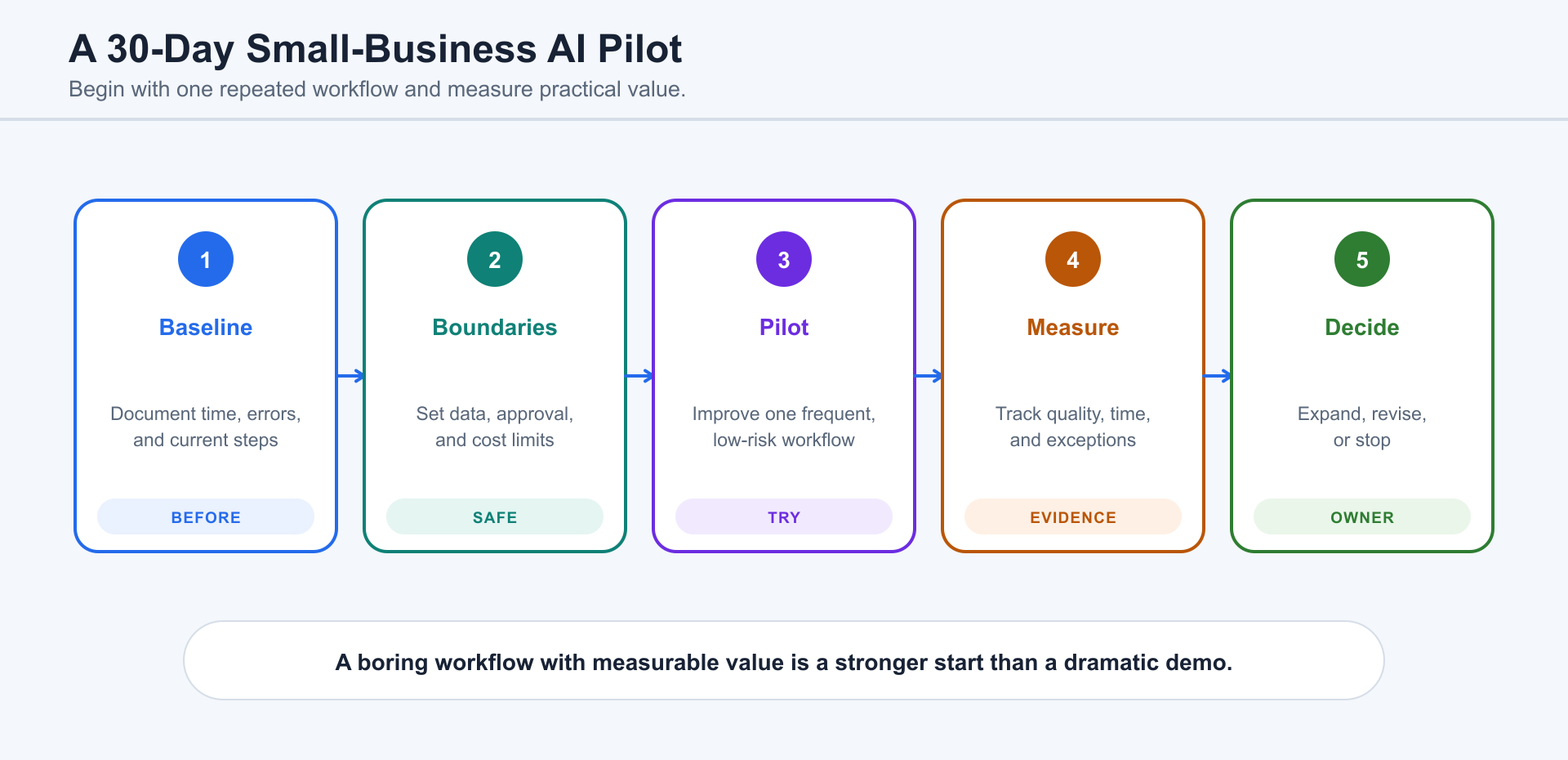
The best first project is small, frequent, and low-risk. If ChatGPT can save two hours every week on a repeated workflow, that is more valuable than a dramatic automation that nobody maintains. Humans should track time saved, errors reduced, and customer experience improved.
12.2 ChatGPT Across Roles: Founder, Manager, Marketer, Developer
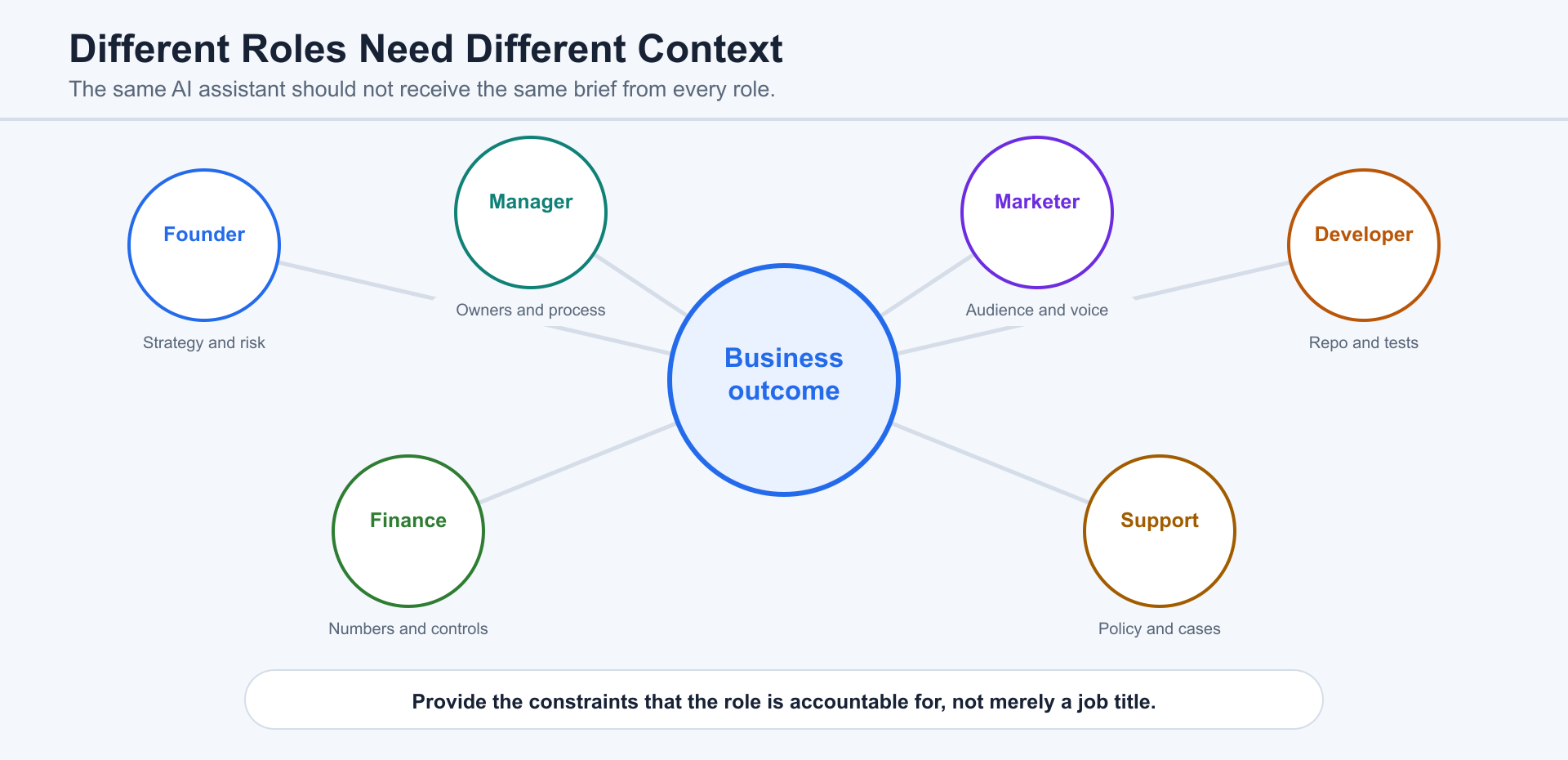
Section titled “12.2 ChatGPT Across Roles: Founder, Manager, Marketer, Developer”Founders can use ChatGPT for business plans, investor updates, hiring documents, competitor analysis, decision memos, and product thinking. Managers can use it for project plans, meeting summaries, workflow design, employee onboarding, and performance documentation. Marketers can use it for customer research, campaign briefs, content calendars, ad variations, and landing page copy. Developers can use it for codebase inspection, bug fixing, tests, internal tools, and deployment support.
Each role needs different context. A founder should provide strategy and risk tolerance. A manager should provide responsibilities and process constraints. A marketer should provide audience and brand voice. A developer should provide repo context, commands, and acceptance criteria.
12.3 Customer Communication, Sales, and Marketing
Section titled “12.3 Customer Communication, Sales, and Marketing”ChatGPT can help with sales emails, call summaries, proposal drafts, objection handling, customer segmentation, support macros, and marketing calendars. It can also analyze customer questions and reviews to find repeated needs, confusing language, and product gaps.
Plugins and specialized external tools can strengthen business communication when they serve a defined workflow. Use the definitions in Chapter 3 and the risk controls in Chapter 13. Humans must review claims, pricing, contract language, privacy, and customer-specific details before anything is sent.
12.4 Business Plans, Proposals, and Internal Documents
Section titled “12.4 Business Plans, Proposals, and Internal Documents”Business documents should make decisions easier. A business plan should explain the customer, problem, solution, market, competitors, business model, costs, risks, team, and next milestones. A proposal should explain scope, value, timeline, assumptions, deliverables, price, and approval path. Internal documents should clarify background, decision, owner, deadline, and success metric.
ChatGPT can create structure, draft language, compare options, and identify missing evidence. Humans must provide real numbers, real constraints, and real commitments. A polished proposal with invented assumptions is dangerous.
12.5 Analyzing Feedback, Reviews, and Customer Questions
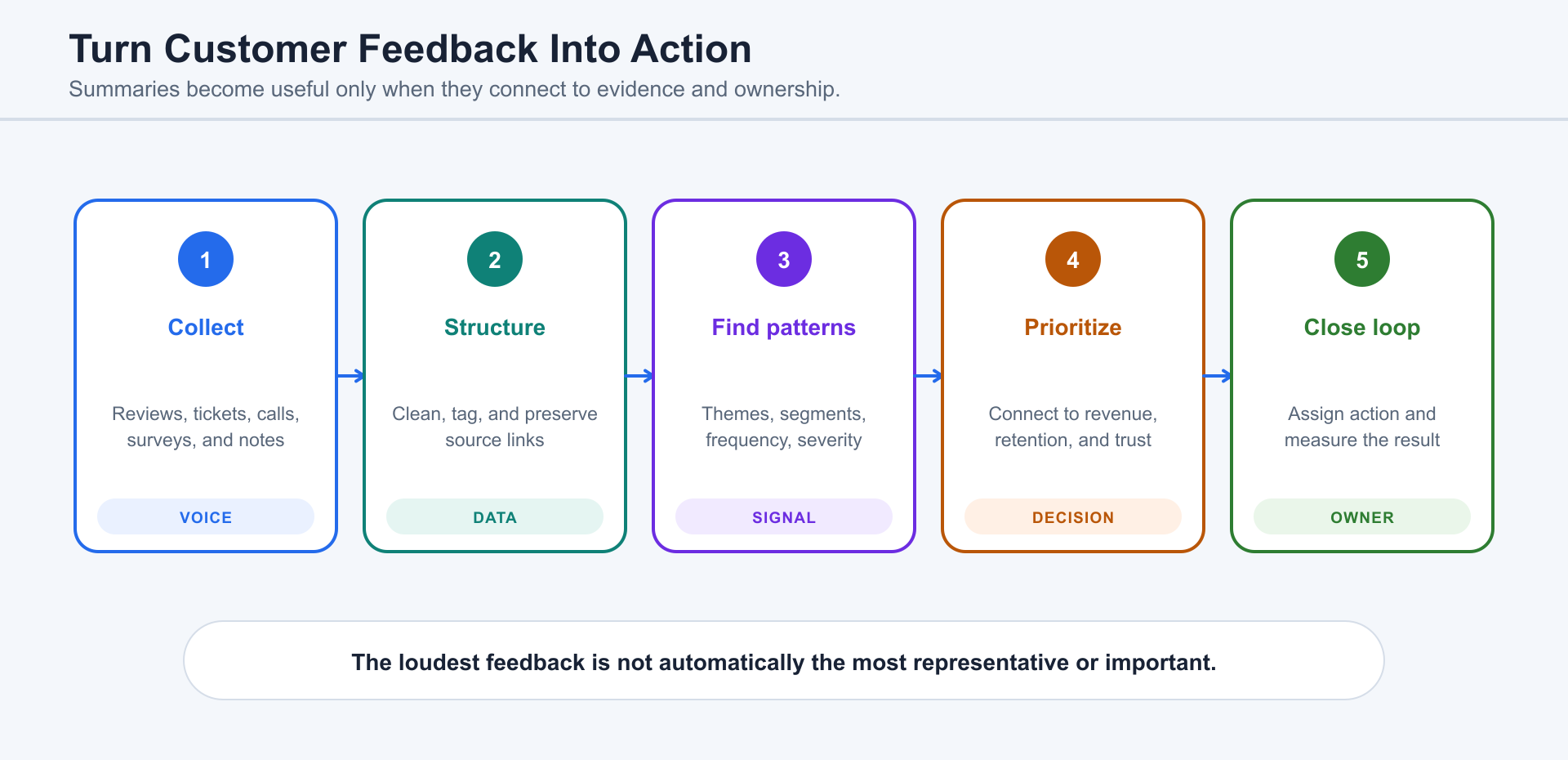
Section titled “12.5 Analyzing Feedback, Reviews, and Customer Questions”Customer feedback is often messy: reviews, emails, support tickets, sales notes, chat logs, survey answers, and meeting transcripts. ChatGPT can categorize themes, detect sentiment, find repeated pain points, summarize objections, and propose product or process improvements.
Humans should watch for sample bias. The loudest customers are not always the largest market. Recent complaints are not always the highest-priority issues. ChatGPT can help quantify patterns, but humans should connect the analysis to revenue, retention, brand trust, and strategic focus.
12.6 Improving Team Workflows
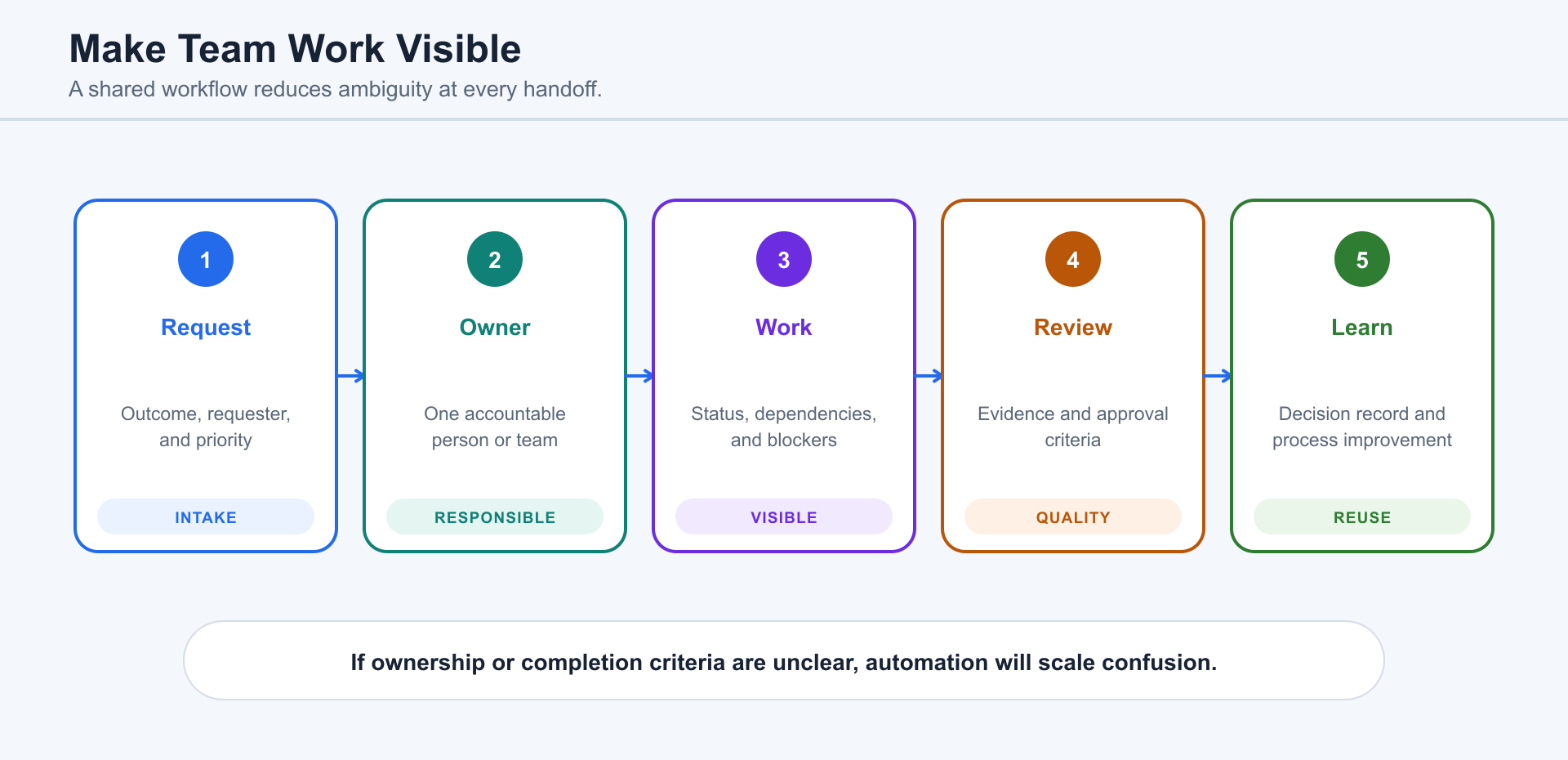
Section titled “12.6 Improving Team Workflows”Team workflows improve when work becomes visible. ChatGPT can map a process, identify bottlenecks, draft SOPs, create RACI tables, summarize decisions, write meeting follow-ups, and convert conversations into tasks. It can also propose lightweight tools for repeated coordination problems.
The hard part is adoption. A workflow document is not useful if the team does not trust it or use it. Humans should involve the people doing the work, test the process, revise it, and remove unnecessary steps.
12.7 Building Lightweight Internal Tools
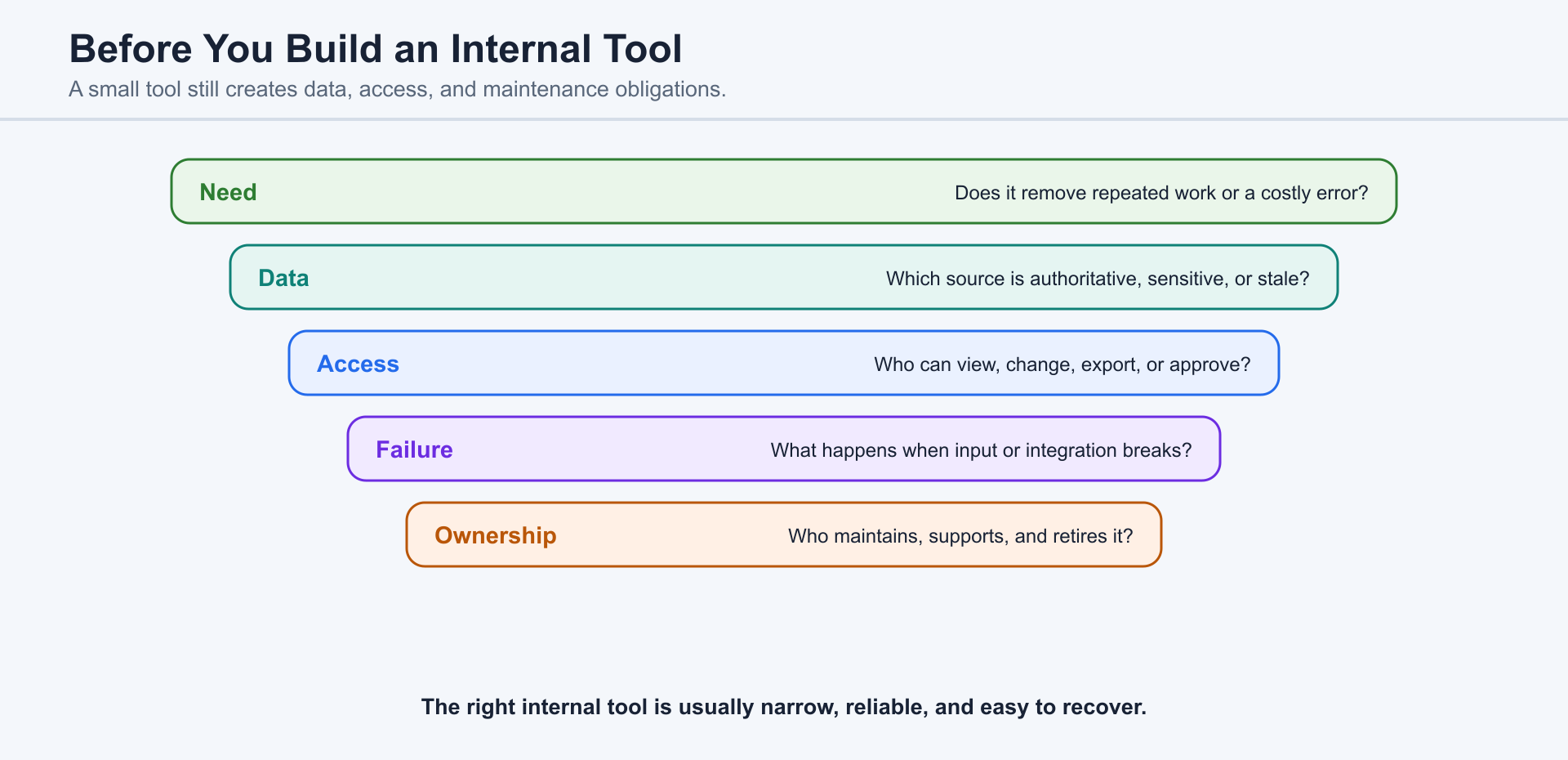
Section titled “12.7 Building Lightweight Internal Tools”Internal tools do not have to be large products. A form that feeds a spreadsheet, a dashboard that shows customer status, a script that checks files, a small admin page, or a report generator can create real value. ChatGPT can help design, build, document, and test these tools.
Before building, ask whether the tool will reduce work or create another place to maintain data. Check permissions, data accuracy, ownership, failure handling, and long-term maintenance. The right internal tool is often boring, reliable, and clear.
12.8 Privacy, Approval, Cost, and Risk Boundaries
Section titled “12.8 Privacy, Approval, Cost, and Risk Boundaries”Business AI needs explicit boundaries. Define what data may be shared with ChatGPT or connected Apps, what must be anonymized, what actions require approval, who may publish content or send customer messages, and who may access sensitive files. Define budget limits for AI tools, media generation, API usage, hosting, and automation runs.
ChatGPT can help draft an AI use policy, risk matrix, approval workflow, and data-handling checklist. Leadership must approve the policy. Employees need examples, not just rules.
12.9 Avoiding Overdependence on AI
Section titled “12.9 Avoiding Overdependence on AI”Overdependence appears when teams stop understanding their own workflows, accept AI summaries without reading source material, send AI-written customer messages without review, or make decisions from unverified analysis. ChatGPT should increase organizational learning, not replace it.
A healthy business workflow keeps humans close to the important evidence: customer voices, financial numbers, operational constraints, and ethical decisions. ChatGPT should make that evidence easier to see and act on.
Collaboration Pattern
Humans define business goals, customer promises, risk boundaries, approvals, and final decisions. ChatGPT analyzes, drafts, organizes, automates, and builds lightweight tools. When the business knows the workflow, ChatGPT optimizes it. When the business is choosing a direction, ChatGPT compares options. When the business is unsure where to begin, ChatGPT asks about customers, revenue, process pain, tools, team capacity, sensitive data, and success metrics.
Field Note
The common business mistake is buying many AI tools before choosing one workflow to improve. The workaround is a 30-day pilot: choose one repeated process, document the current version, use ChatGPT to improve it, measure time saved and errors reduced, and decide whether to expand.
Review Checklist
Check customer impact, privacy, data accuracy, brand voice, pricing, legal or financial claims, approval requirements, cost, maintenance owner, and failure handling. For customer-facing videos or marketing assets, review claims, permissions, localization, subtitles, and distribution context.
Handoff Prompt
“Act as my business operations partner. My business is ____. The workflow or problem is ____. The current tools are ____. The sensitive-data boundaries are ____. The goal is ____. Ask clarifying questions first. Then propose a practical ChatGPT workflow, identify which steps need connected tools or software implementation, define approval points and risks, and design a 30-day pilot.”