Chapter 9: ChatGPT for Research and Learning
ChatGPT can make research and learning faster, but speed can create shallow confidence. The goal is not to collect fluent answers. The goal is to build understanding that can be checked, applied, and revised. Humans must remain responsible for source judgment, fact-checking, practice, and interpretation.
9.1 Asking Research Questions That Lead Somewhere
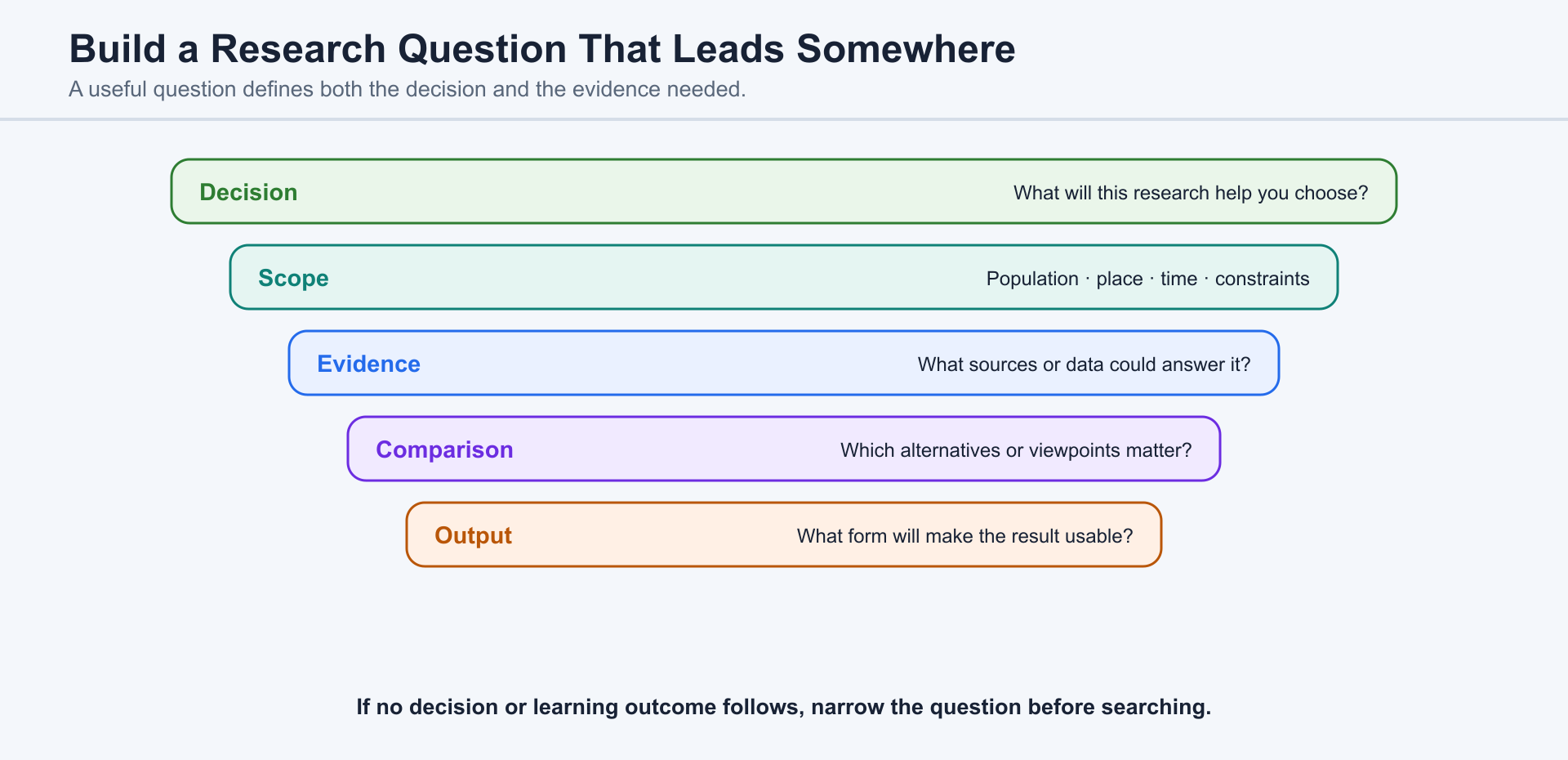
Section titled “9.1 Asking Research Questions That Lead Somewhere”A good research question has a purpose. “Tell me about AI tools” is too broad. “Compare three ways a small business can use ChatGPT to reduce admin work without exposing customer data” leads somewhere. ChatGPT can help refine broad curiosity into research questions, subquestions, source needs, and decision criteria.
If the human does not know what to ask, ChatGPT should use reverse prompting. It can ask: What decision are you trying to make? What do you already know? What would change your mind? Do you need a beginner explanation, a technical comparison, a market overview, or a practical plan?
9.2 ChatGPT as Tutor, Study Partner, and Explainer
Section titled “9.2 ChatGPT as Tutor, Study Partner, and Explainer”As a tutor, ChatGPT should diagnose before teaching. It should ask about the learner’s current level, goal, time, preferred style, and real project. It can explain a concept simply, then technically, then through examples, then through practice questions.
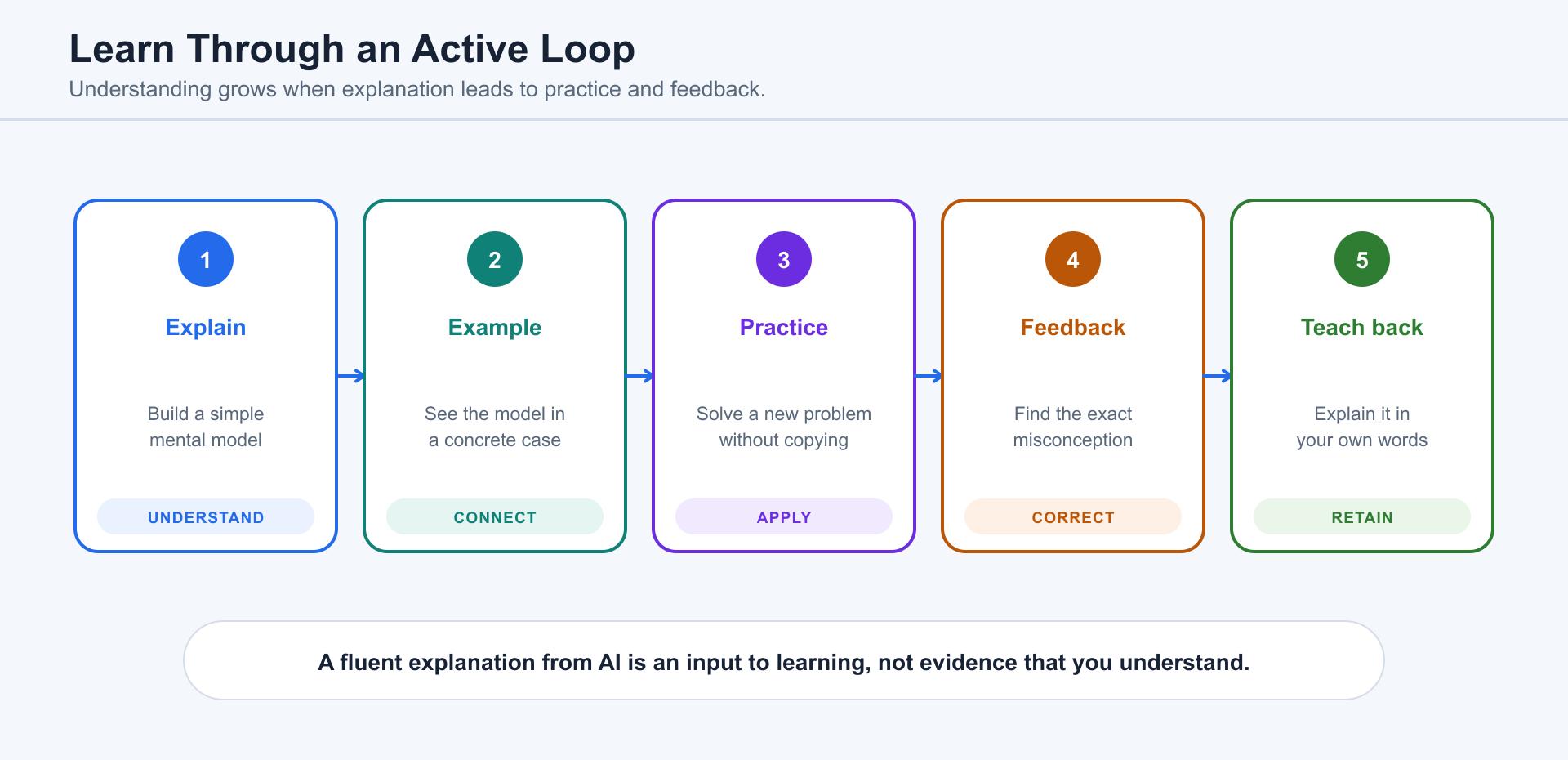
The strongest learning mode is interactive. Instead of asking ChatGPT to lecture, ask it to question you. “Teach me this concept, but stop after each step and ask me to explain it back.” This helps reveal misunderstandings. Human answers may be imprecise, and that is useful. ChatGPT can translate imperfect answers into clearer understanding.
9.3 Learning Through Projects, Not Just Answers
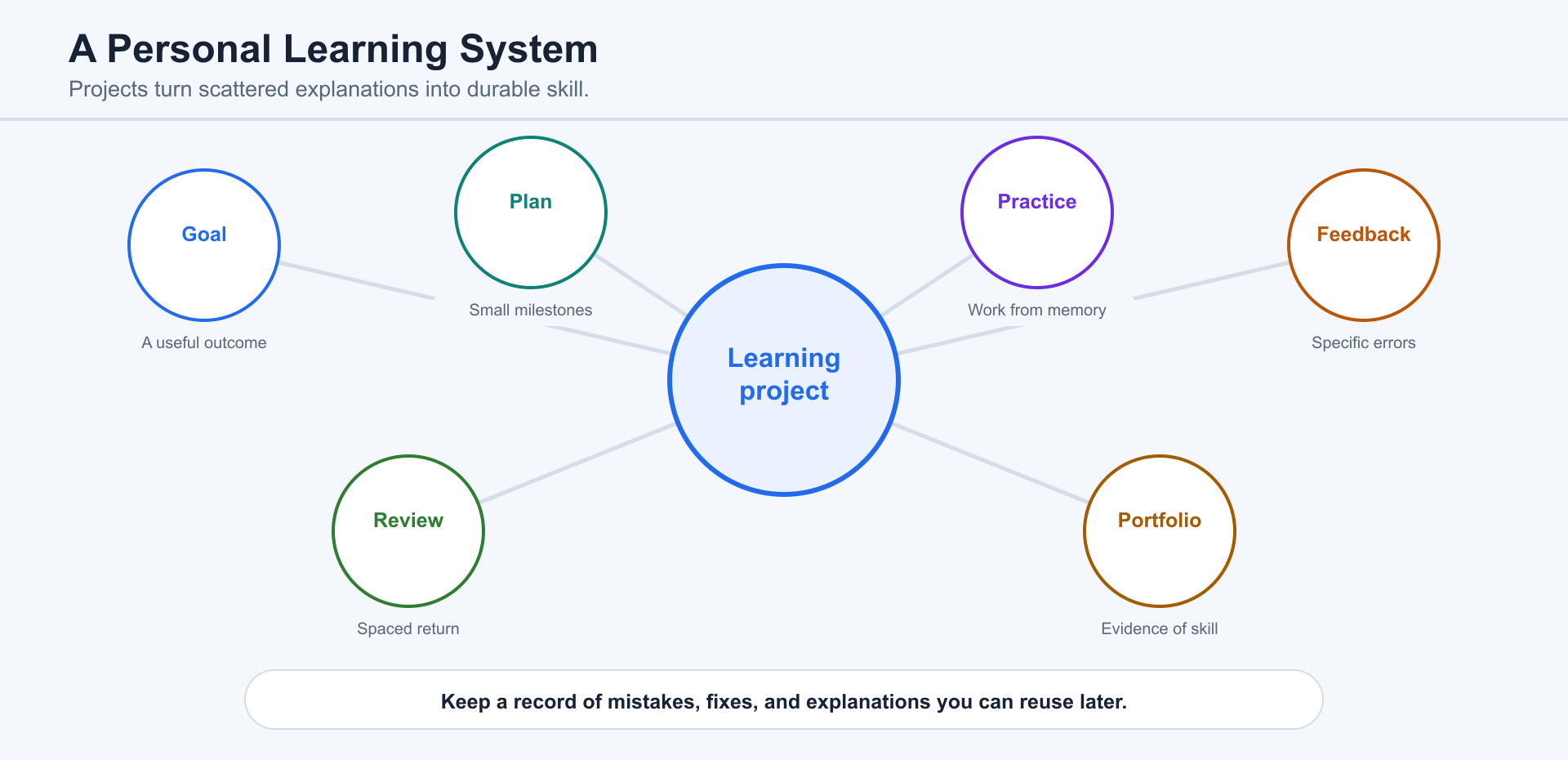
Section titled “9.3 Learning Through Projects, Not Just Answers”People learn more deeply when they build something. To learn websites, build a landing page. To learn Python, analyze a CSV file. To learn TypeScript, build a small form or utility. To learn product thinking, interview users and write a product brief. ChatGPT can design project paths that grow in difficulty.
The project should produce evidence: a working page, a script output, a quiz score, a written explanation, a deployed demo, or a reviewed draft. ChatGPT can help fix errors, but the human should still perform the steps, read the output, and explain what changed.
9.4 Comparing Sources, Viewpoints, and Tradeoffs
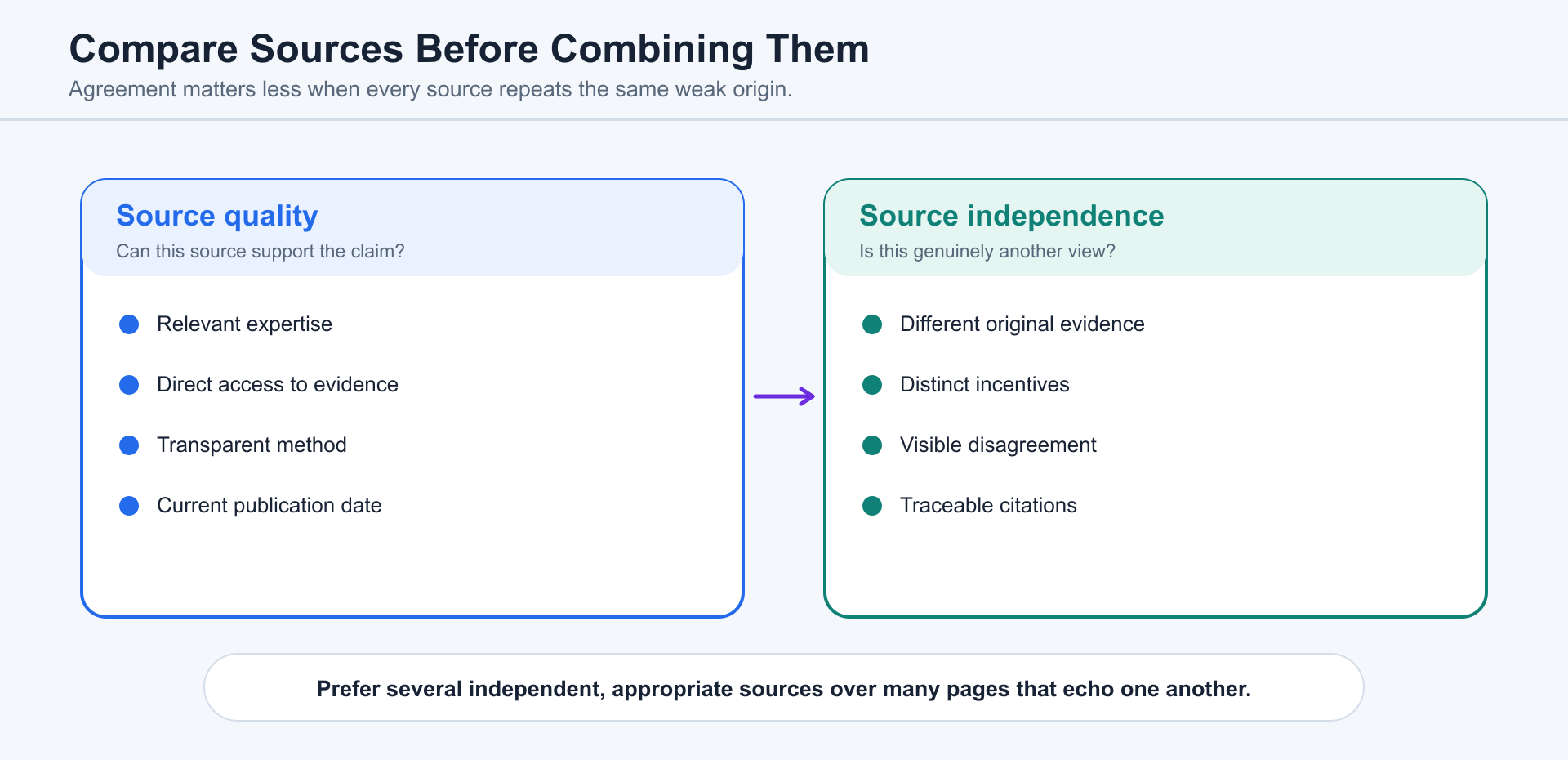
Section titled “9.4 Comparing Sources, Viewpoints, and Tradeoffs”Research should include more than one viewpoint. ChatGPT can compare official documentation, academic research, practitioner experience, community discussions, vendor claims, and critical perspectives. It can identify where sources agree, where they conflict, and what each source may be biased to emphasize.
Humans should ask ChatGPT for dates, source types, citations, and confidence limits. Product features, laws, prices, APIs, leadership, market data, and safety recommendations can change. For current or high-stakes topics, use current reliable sources rather than relying on model memory.
9.5 Building Study Guides, Quizzes, and Practice Plans
Section titled “9.5 Building Study Guides, Quizzes, and Practice Plans”ChatGPT can turn material into a study guide, glossary, flashcards, quizzes, practice problems, project assignments, and review schedules. A good plan includes input, practice, feedback, and spaced review. A weak plan only lists resources.
Ask ChatGPT to create checkpoints: “After day three, I should be able to explain ____. After week one, I should be able to build ____. Test me before moving on.” The human should keep a record of mistakes because mistakes reveal the next lesson.
9.6 Learning Technical Skills With Python, Node.js, and TypeScript
Section titled “9.6 Learning Technical Skills With Python, Node.js, and TypeScript”Python is a strong beginner and automation language because it is readable and useful for data, files, scripts, APIs, and analysis. Node.js is useful for JavaScript-based tooling, server tasks, web automation, and API services. TypeScript is valuable when projects grow because it makes data shapes, component props, and contracts more explicit.
ChatGPT can explain errors, generate examples, write tests, compare libraries, and help set up projects. Humans should still understand the environment: package managers, dependency versions, commands, inputs, outputs, and logs. The point is not to memorize every syntax detail. The point is to understand enough to ask better questions, inspect results, and avoid being fooled by plausible code.
9.7 Fact-Checking, Dates, and Source Verification
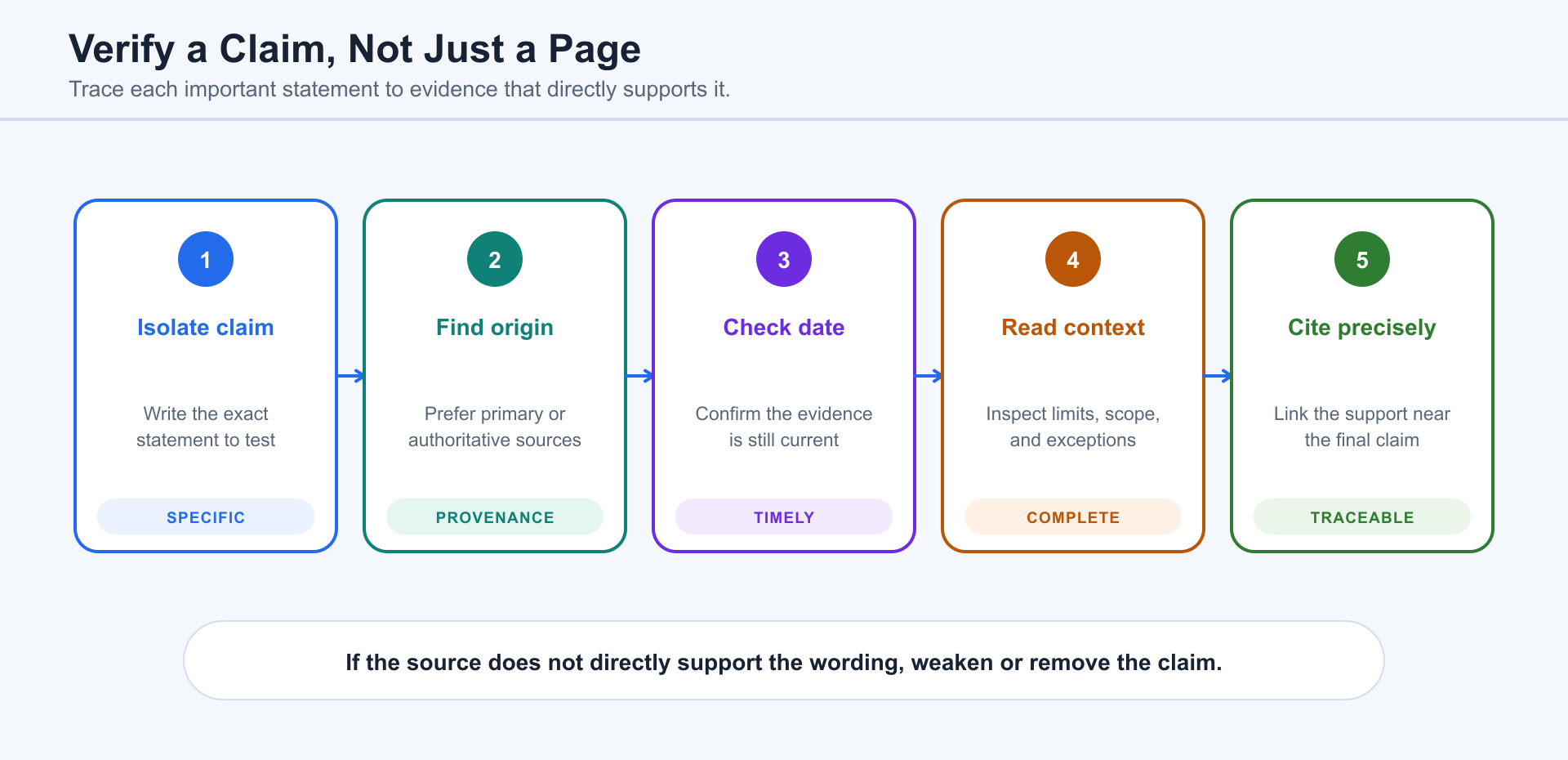
Section titled “9.7 Fact-Checking, Dates, and Source Verification”Fact-checking is central to research. Dates, prices, laws, APIs, product names, App capabilities, and public figures can change. ChatGPT should distinguish stable knowledge from current information. For changing or high-stakes topics, ask it to use reliable sources, compare publication dates, cite claims, and state uncertainty.
Humans should inspect whether the source is official, recent, relevant, and independent. A vendor page may be accurate about features but biased about tradeoffs. A forum post may reveal real problems but not represent the average user. A summary without source context is not enough for serious decisions.
9.8 Avoiding Shallow Understanding
Section titled “9.8 Avoiding Shallow Understanding”Shallow understanding feels like clarity but fails under pressure. Warning signs include being able to repeat a definition without giving an example, accepting a conclusion without knowing its limits, or following a tutorial without being able to change it. ChatGPT can test for depth by asking for examples, counterexamples, explanations, and transfer tasks.
A useful prompt is: “Do not just explain this. Ask me questions that reveal whether I understand it. If I answer vaguely, help me refine the answer.” This turns ChatGPT into a learning partner rather than an answer dispenser.
9.9 Building a Personal Learning Loop
Section titled “9.9 Building a Personal Learning Loop”A personal learning loop has five parts: choose a goal, learn the minimum concept, apply it in a project, review mistakes, and schedule the next challenge. ChatGPT can maintain the loop by creating practice plans, summarizing errors, generating exercises, and reminding the learner what remains weak.
The long-term asset is not one answer. It is a personal knowledge system: notes, examples, projects, wrong answers, corrected explanations, templates, and questions worth revisiting. ChatGPT can help organize that system, but the human builds understanding by using it.
Collaboration Pattern
Humans define learning goals, practice, and source judgment. ChatGPT explains, questions, compares, quizzes, and adapts. When the learner knows the goal, ChatGPT builds a plan. When the learner is exploring, ChatGPT compares paths. When the learner is lost, ChatGPT asks diagnostic questions and teaches through interaction.
Field Note
The common failure is confusing explanation with mastery. Reading a clear answer is not the same as being able to use it. The workaround is to require output: a quiz, a project, a summary in your own words, or a real decision based on the research.
Review Checklist
Check whether the research question is clear, sources are current, claims are separated from interpretation, uncertainty is visible, and the learner can apply the idea. For technical learning, check that commands ran, outputs are understood, and errors were not hidden.
Handoff Prompt
“I want to learn or research ____. My current level is ____. My goal is ____. I can spend ____. Please ask diagnostic questions first. Then create a learning path, key concepts, project exercises, quizzes, source-verification steps, and a weekly review loop.”